
Germany has introduced a brilliant innovation in renewable energy
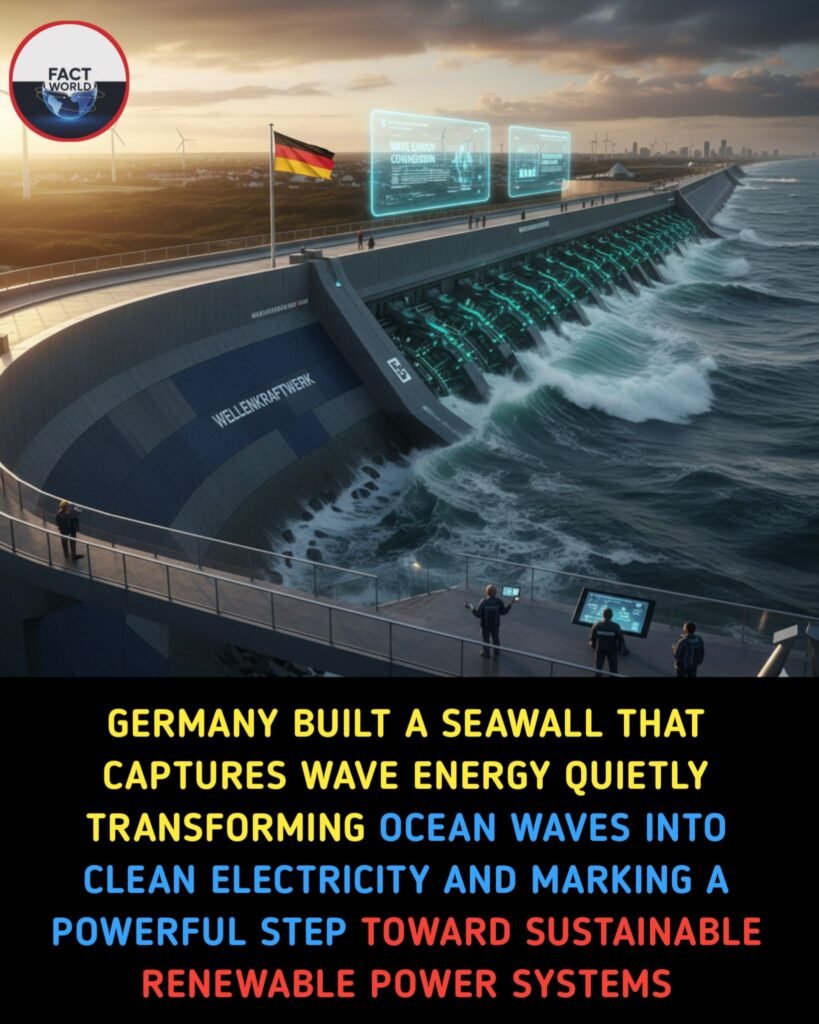
Germany has introduced a brilliant innovation in renewable energy—an engineered seawall designed not only to protect the coastline, but also to capture the power of ocean waves and turn it into clean electricity. Instead of letting waves crash and disappear, this technology absorbs their kinetic energy and converts it into usable power. The result is a system that works quietly, efficiently, and continuously, without relying on sunlight, wind, or fuel.
What makes this approach special is its dual purpose. The seawall still acts as a protective barrier against storms and rising sea levels, but now it also serves as a renewable energy source. For coastal communities vulnerable to climate change, this presents a powerful model: infrastructure that doesn’t just resist nature, but works harmoniously with it.
Wave energy has long been considered one of the most promising yet underused renewable sources. Waves are predictable, constant, and incredibly powerful—delivering far more energy density than wind or solar. Germany’s project is a major step toward unlocking that potential on a large scale.
If adopted globally, similar systems could turn coastlines into silent, sustainable power stations—reducing fossil fuel dependence, lowering carbon emissions, and providing stable electricity to millions.
This seawall represents more than engineering—it symbolizes creativity, resilience, and respect for natural forces. It reminds us that solutions to climate change aren’t always loud or flashy. Sometimes, they arrive quietly, carried in with the tide.
#WaveEnergy#CleanPowerFuture#InnovationForEarth#ClimateSolutions#RenewableRevolution#SustainableEngineering

