
Quantum Computing Breakthrough
Quantum Computing Breakthrough
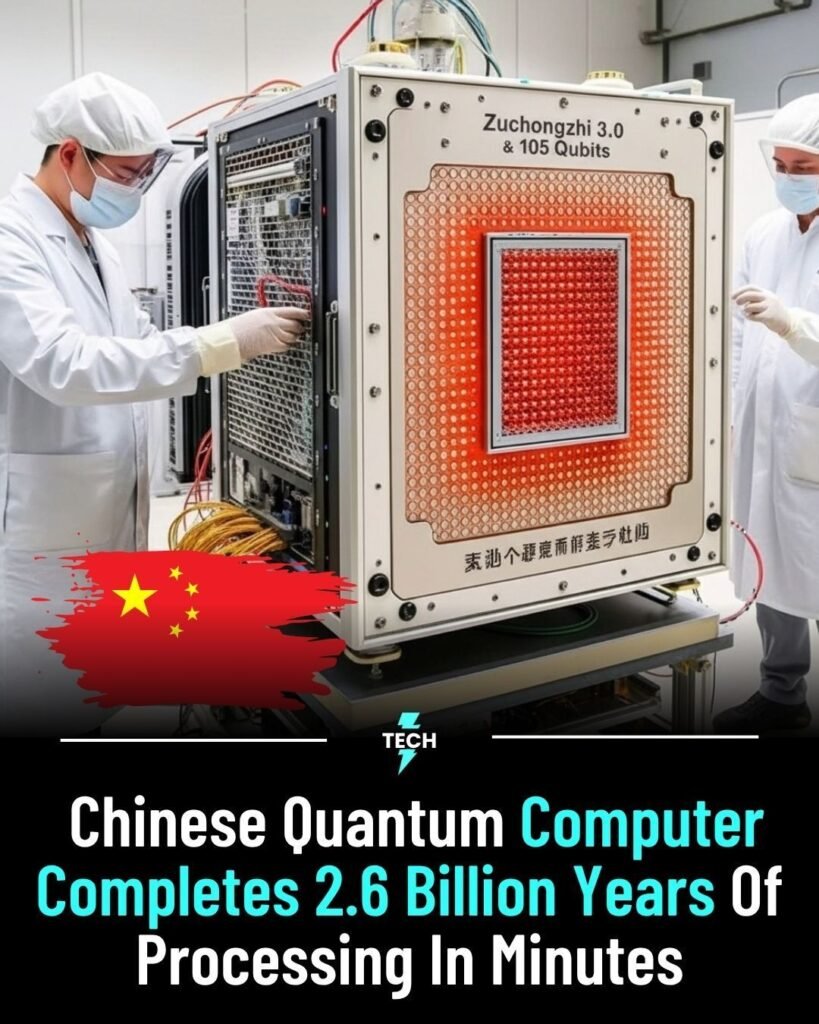
Chinese scientists have achieved a historic milestone by completing the equivalent of 2.6 billion years of classical computation in just minutes using a quantum computer. This groundbreaking achievement demonstrates the extraordinary potential of quantum technology, capable of solving problems that would take conventional supercomputers billions of years to process. By leveraging quantum superposition and entanglement, researchers can perform massive calculations simultaneously, opening new possibilities in fields like cryptography, artificial intelligence, and complex scientific simulations.
The quantum system operates with qubits that exist in multiple states at once, enabling parallel computation on an unprecedented scale. Early tests have shown that the computer can handle tasks previously considered impossible, potentially transforming industries that rely on heavy computational power. This includes drug discovery, climate modeling, logistics optimization, and materials science. The speed and efficiency of quantum processing could accelerate research timelines, reduce costs, and tackle problems that were previously beyond reach.
Experts emphasize that while large-scale practical quantum computing is still in development, this achievement sets a new benchmark for computational speed and capability. China’s success highlights the global race for quantum supremacy and showcases the transformative impact quantum technology may have on science, industry, and national security in the coming years. The breakthrough marks a major leap toward a future where computational limits are redefined.

